You finally decide to build a fence. Maybe it’s for privacy. Maybe it’s for pets. Either way, you’re ready to get started.
Then your contractor asks a simple question:
“Where are your property corners?”
That’s where things get tricky.
Most homeowners in Oklahoma City think they know their boundary. They look at an old fence, a tree line, or even their neighbor’s yard. It feels obvious. But that guess can go wrong fast.
This is where property line markers come in. They show the real edges of your land. And if you plan to build a fence, they matter more than anything else.
What Property Line Markers Actually Are
Property line markers are physical points in the ground. They show where your lot begins and ends.
A surveyor places them based on legal records. You’ll usually find them at the corners of your property. In most cases, they look like metal rods, iron pins, or small caps set in the ground.
They are not always easy to spot. Sometimes grass or dirt covers them. In other cases, landscaping or construction may have moved them.
Still, they are the only reliable reference for your boundary.
Why Your Eyes Can Fool You
A lot of people trust what they see. That’s where problems start.
That old fence in your backyard might not sit on the true line. It could be off by a few inches. Sometimes it’s off by a foot or more.
Tree lines can also trick you. People plant trees based on looks, not legal lines. The same goes for driveways, sheds, and gardens.
Online maps don’t help much either. They give a rough idea, but they are not exact. They are not meant for building anything permanent.
So even if everything looks straight, it doesn’t mean it’s correct.
Why Property Line Markers Matter Before Building a Fence
A fence is not like a lawn chair. You can’t just move it later without cost.
Once the posts go in, the fence is set. If it crosses the line, even by a small amount, you may have to take it down.
That means paying for removal, paying again to rebuild, and dealing with delays.
It also creates tension with neighbors. Nobody likes to hear that a fence is in the wrong spot.
That’s why property line markers matter before the first hole gets dug. A lot of fence problems start when people skip checking their boundaries first.
How Fence Placement Depends on Those Markers
Fence installers don’t guess. They follow the line.
In many cases, the fence sits just inside your property. That gives a small buffer and avoids overlap.
To do that, they need clear corner points. Then they run a straight line between those points.
If even one marker is off or missing, the whole fence can shift. And once that happens, the layout no longer matches your legal boundary.
So the accuracy of your fence starts with the accuracy of those markers.
Common Mistakes Homeowners Make
These show up all the time in OKC.
First, people assume an old metal rod is correct. It might be. It might not. If someone moved it years ago, it no longer tells the truth.
Second, they trust previous owners. Verbal info doesn’t count when it comes to property lines.
Third, they rely on apps or county maps. Those tools help with general layout, but they are not precise enough for construction.
Finally, many skip checking markers altogether. They just start building.
That works until it doesn’t.
What to Check Before You Build
Before you order materials or hire a crew, take a look at your lot.
Can you find all four corners?
Do they line up with the shape you expect?
Are any missing, buried, or unclear?
If something feels off, don’t ignore it. That small doubt can turn into a bigger issue once construction begins.
When Markers May No Longer Be Reliable
Markers don’t always stay in place forever.
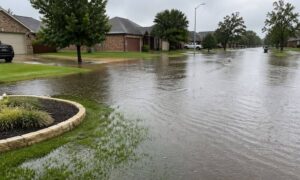
Heavy rain can shift soil. Yard work can disturb them. Past construction can remove them without notice.
In older neighborhoods, some markers may never have been easy to find in the first place.
So even if your property has markers, they may not reflect the true position today.
How Professionals Help Confirm Marker Locations
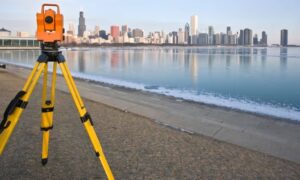
This is where a licensed surveyor comes in. They don’t guess. A surveyor can check your property corners and make sure everything lines up before construction starts.
They use recorded data tied to your property. Then they locate existing markers or reset them if needed.
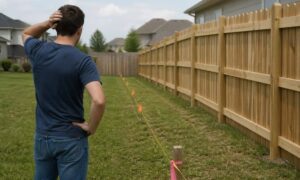
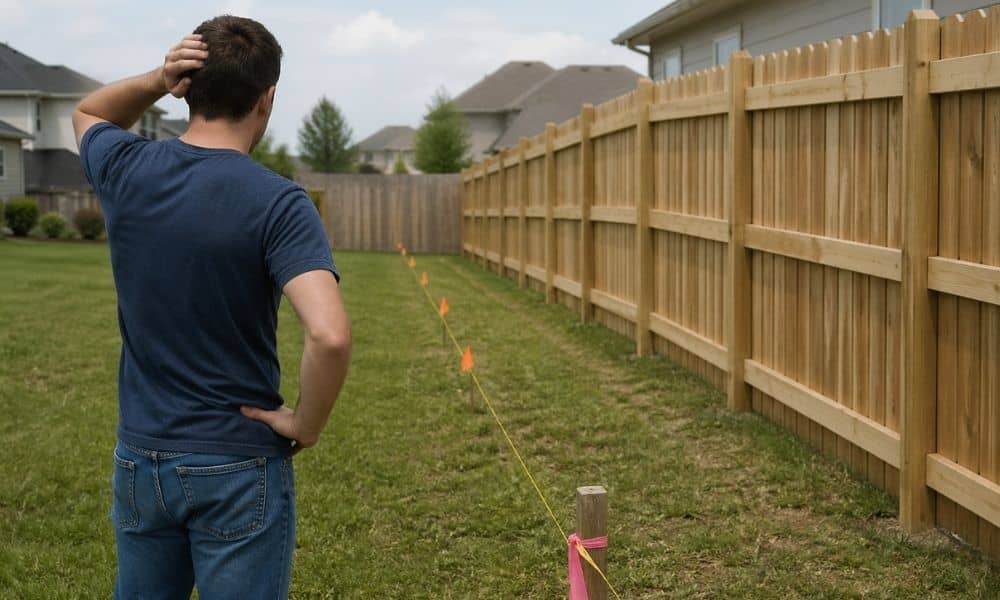
They can also make the line visible with flags or stakes. That gives your fence installer a clear path to follow.
It removes the guesswork and keeps everything aligned from start to finish.
What Happens If You Skip This Step
Some homeowners try to save money and move forward without checking markers.
It often costs more later.
If the fence goes in the wrong spot, you may have to tear it down. That means labor, materials, and time lost.
Even worse, fixing it after the fact is harder than doing it right the first time.
A fence should be a one-time project. Not something you redo.
Build It Right the First Time
A fence looks simple. It’s just posts and panels.
But the placement matters more than the materials.
Property line markers give you a clear starting point. They show exactly where your land ends. Once you know that, the rest of the project becomes much easier.
If you’re planning a fence, getting a property line survey makes sure those markers are right before you build.
It’s a small step, and it can save you from tearing out a fence later.