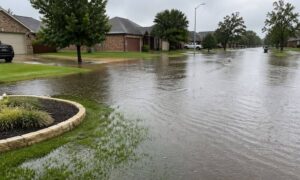
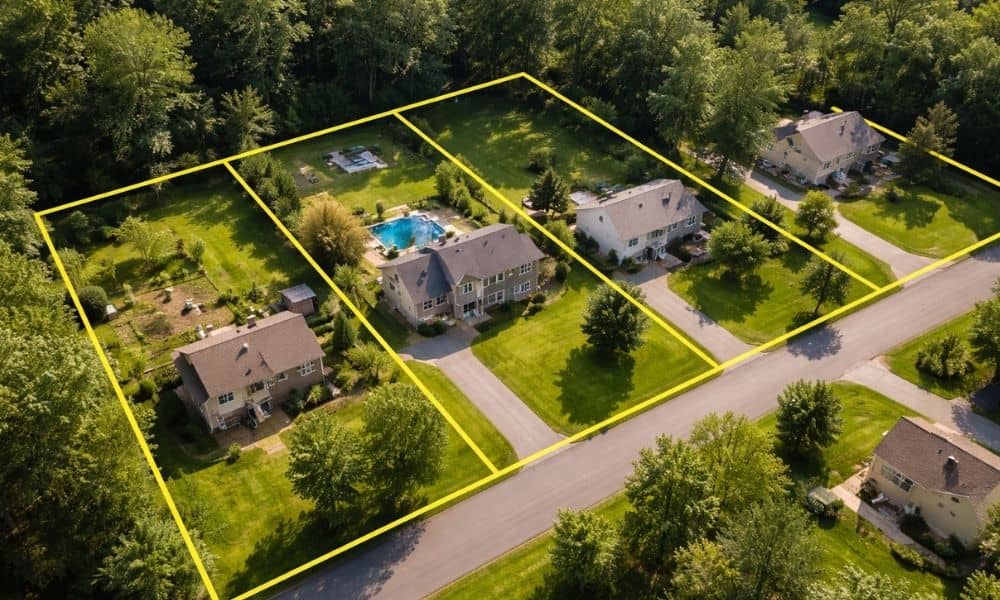
A recent fight over land along the Red River has been making headlines. The issue is between Texas and Oklahoma, and it all comes down to one question: where is the real boundary? At first, this sounds like a problem only governments deal with. However, the truth is much simpler—and more relatable. The same kind of confusion happens every day between neighbors, homeowners, and buyers. The Red River has shifted over time. Because of that, the land next to it no longer matches older records. So now, people are asking who truly owns certain pieces of land. Courts are stepping in, and instead of guessing, they look at legal records, past surveys, and the kind of work a cadastral surveyor handles.
This is where the story becomes useful for everyday property owners, because most people don’t really think about understanding where your property line really is until something goes wrong.
If a state border can be unclear, then your property line can be unclear too.
Property Lines Are Not Always What They Seem
Many people believe they know where their property ends. Maybe they trust the fence, the edge of the yard, or even what a previous owner told them. While that may feel right, it is not always correct.
Property lines are not based on what you see. Instead, they come from legal descriptions, recorded documents, and measured points on the ground. And when things don’t quite match up, that’s usually when people end up working with a cadastral surveyor to confirm your property line.
That is why two neighbors can look at the same piece of land and believe two different things.
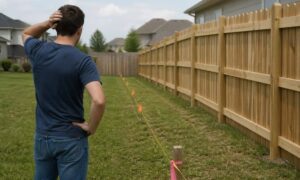
In many cases, no one notices the problem until something changes. For example, someone builds a fence, installs a driveway, or starts a new project. Then suddenly, the question comes up: “Is this still my land?”
That moment is when small misunderstandings turn into real disputes.
Why Small Boundary Issues Turn Into Big Problems
Most boundary issues do not start as major conflicts. In fact, they usually begin with simple assumptions.
A homeowner might place a fence based on where they think the line is. A neighbor might mow or use part of the yard for years without question. Over time, those habits feel like facts.
However, when a property gets sold or developed, everything gets checked more closely. That is when the problem shows up.
Even a difference of a few feet can matter. It can affect ownership, value, and even legal rights.
The Red River dispute shows this on a larger scale. The land did not change overnight, but the understanding of it did. Once that happened, people had to rely on real evidence, not just what looked right.
The same idea applies to a backyard in Oklahoma City.
The Role of a Cadastral Surveyor in Finding the Truth
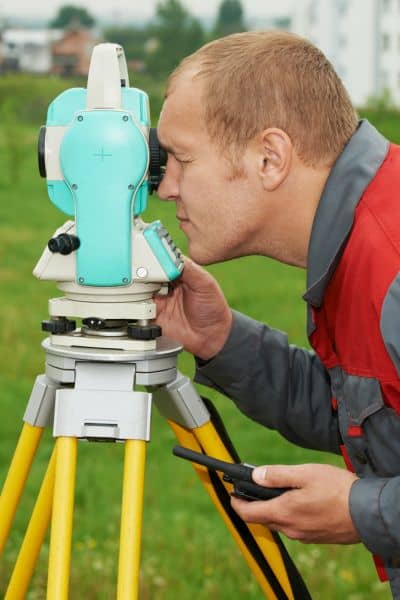
When property lines become unclear, someone needs to find the real answer. That is the job of a cadastral surveyor.
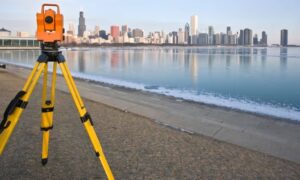
A cadastral surveyor focuses on property boundaries. They study legal records, compare past surveys, and look for physical evidence on the land. Then, they connect all that information to define the true boundary.
This process is not guesswork. It is based on facts, measurements, and history.
For example, a cadastral surveyor may review old deeds, check subdivision plats, and search for original markers placed years ago. If markers are missing, they use surrounding evidence to rebuild the correct position.
Because of this, they provide a clear and defensible boundary.
That clarity is what prevents disputes—or helps resolve them when they happen.
Why Online Maps and Visual Clues Can Mislead You
Today, it is easy to pull up a map online and see property lines. While that is helpful, it can also be misleading.
Digital maps are not legal documents. They give a general idea, but they do not show exact boundaries on the ground.
The same goes for fences, driveways, and landscaping. These features may look like boundaries, but they are not always placed correctly.
Over time, markers can move, get buried, or disappear. When that happens, the visible layout of a property no longer matches the legal one.
This is why relying only on what you see can lead to problems.
Instead, accurate boundaries come from proper surveying.
How This Applies to Property Owners in Oklahoma City
Oklahoma City has a mix of older neighborhoods and new developments. Because of that, property records can vary in age and detail.
In some areas, boundaries were set many years ago. Over time, changes in land use, construction, and ownership can create confusion.
In newer areas, fast development can lead to rushed decisions. Builders and homeowners may rely on plans without double-checking exact boundaries on the ground.
As a result, boundary questions can come up more often than expected.
That is why working with a cadastral surveyor is important. They bring clarity to both old and new properties, making sure the legal boundary matches what is actually marked on the land.
Knowing When to Take Action Matters
Many people wait until there is a problem before checking their property line. By that time, the situation is often more complicated.
Instead, it helps to act early.
If you plan to build, buy, or make changes near a boundary, it is worth confirming the line first. That simple step can prevent stress, delays, and extra costs later.
The Red River case shows what happens when boundaries are left unclear for too long. While your situation may be smaller, the lesson is the same.
Clear boundaries protect everyone involved.
A Simple Lesson From a Complex Dispute
The Red River border fight may seem far removed from daily life. However, it highlights a basic truth.
Property lines are not always obvious. They require careful work to define and confirm.
A cadastral surveyor provides that work. They turn uncertainty into clear, legal boundaries that people can trust.
In the end, whether it is a state border or a backyard fence, the goal is the same.
Know exactly where your property begins—and where it ends.