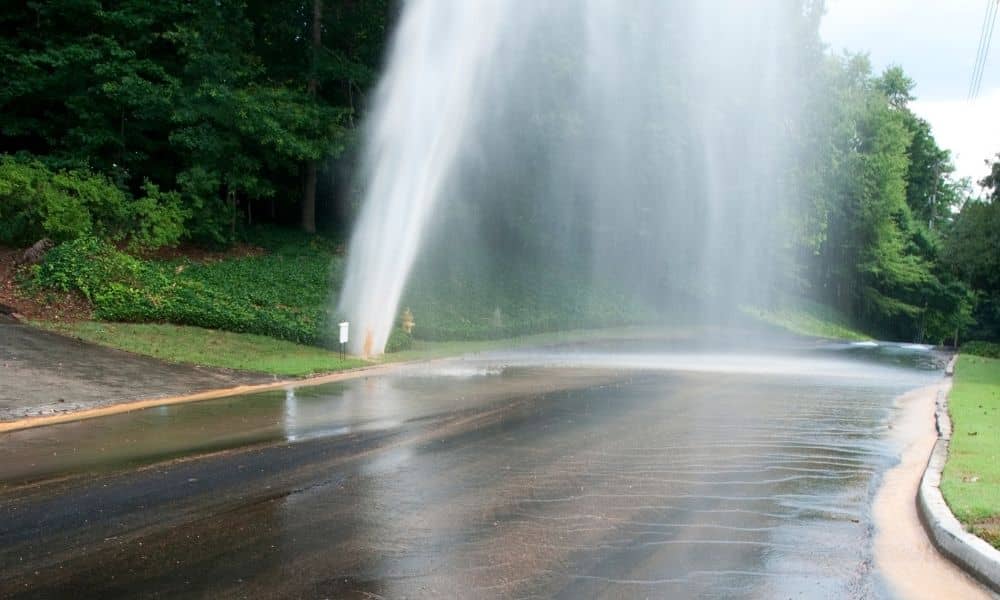
When a water main breaks, it gets attention fast. Streets flood. Traffic stops. Videos spread across social media within minutes. Recently, Oklahoma City saw exactly this kind of disruption when a water main failure sent water rushing across the road and forced crews into emergency mode. At first glance, it looks like bad luck or aging pipes. However, when you look deeper, these events often reveal something bigger. Many utility failures expose gaps in planning, documentation, and field verification. That is where a construction survey becomes far more important than most people realize.
This is not just a city problem. Property owners, developers, contractors, and managers all feel the impact when underground systems fail.
What water main breaks really show us
A water main does not usually fail without warning. Over time, small issues build up. Pipes shift. Soil settles. Past repairs change alignments. Unfortunately, records do not always keep up with reality.
In many older areas of Oklahoma City, underground utilities were installed decades ago. Since then, streets were widened, lots were redeveloped, and new lines were added. As a result, maps and drawings often show what should be there, not what is there.
When crews respond to a break, they often rely on these records. Yet if the information is off by even a small amount, problems multiply fast. That is why emergency repairs can cause more damage than expected.
A construction survey helps close that gap between plans and the real world.
Why emergency repairs are high-risk situations
Emergency work happens under pressure. Crews must act quickly to stop water loss and restore service. Because of that urgency, decisions are often made on the spot.
However, speed without verification can be costly. Excavation may happen too close to another utility. Repairs may change grades slightly. Pavements or sidewalks may go back in the wrong place.
This is where a construction survey adds value. It provides verified control points and elevations before, during, and after work. Instead of guessing, crews have clear reference data.
Even during fast-moving repairs, that clarity reduces risk.
The hidden challenge of rights-of-way and easements
Many people assume water mains sit neatly under public streets. In reality, they often run near property edges, sidewalks, and access drives. Some lines sit within easements that cross private land.
During a repair, it is easy to cross an invisible line. A few feet in the wrong direction can place equipment or excavation on private property. That can lead to disputes, claims, or long-term access issues.
A construction survey confirms where public right-of-way ends and private ownership begins. It also identifies easements that allow access for utilities. With this information, repairs stay within legal limits.
As a result, property owners avoid conflicts that can last far longer than the repair itself.
Why documentation matters after the work is done
Once water service returns, most people move on. Yet questions often follow weeks or months later. Was the driveway damaged? Did drainage change? Did the sidewalk move slightly?
Without clear records, these questions become arguments. Everyone remembers events differently. Photos help, but they do not tell the whole story.
Construction survey documentation provides objective evidence. It shows locations, elevations, and conditions at a specific time. That record protects owners, contractors, and managers if claims arise.
In many cases, the value of a construction survey appears after the emergency, not before it.
Who benefits from a construction survey in these situations
Construction surveys are not just for large developments. In fact, many people benefit from them during utility-related work.
Commercial property owners rely on surveys to protect access and parking areas. Property managers use them to document conditions before and after repairs. Contractors depend on verified data to avoid mistakes. Developers need them when working near existing infrastructure.
Even homeowners can benefit when major utility work happens near their property.
In each case, the goal is the same: reduce uncertainty.
What to consider before authorizing excavation near your property
If utility work is planned near your building or lot, a few questions can save trouble later.
First, ask whether survey control has been established. Next, confirm that right-of-way and easement limits are clear. Then, make sure elevations will be checked before surfaces are restored. Finally, confirm that existing conditions are documented.
These steps do not slow projects down. Instead, they prevent problems that cause delays later.
How a construction survey fits into smarter risk management
Many people think surveys are only about building placement. In reality, a construction survey is a risk management tool. It supports decision-making when conditions are uncertain.
Water main breaks highlight how fragile underground systems can be. They also show how fast small errors can become big problems. When survey data guides the work, crews operate with confidence instead of assumptions.
Over time, that approach saves money, reduces disputes, and protects property value.
A lesson can take forward
Viral videos fade quickly. Streets dry up. Traffic returns to normal. Yet the lessons remain.
Water main breaks remind us that what lies underground matters just as much as what we see on the surface. They also remind us that clear, verified information makes every repair safer.
A construction survey brings that clarity. It connects plans to reality. It protects everyone involved. Most importantly, it turns reactive fixes into informed solutions.
Before the next emergency hits, asking the right questions can make all the difference.